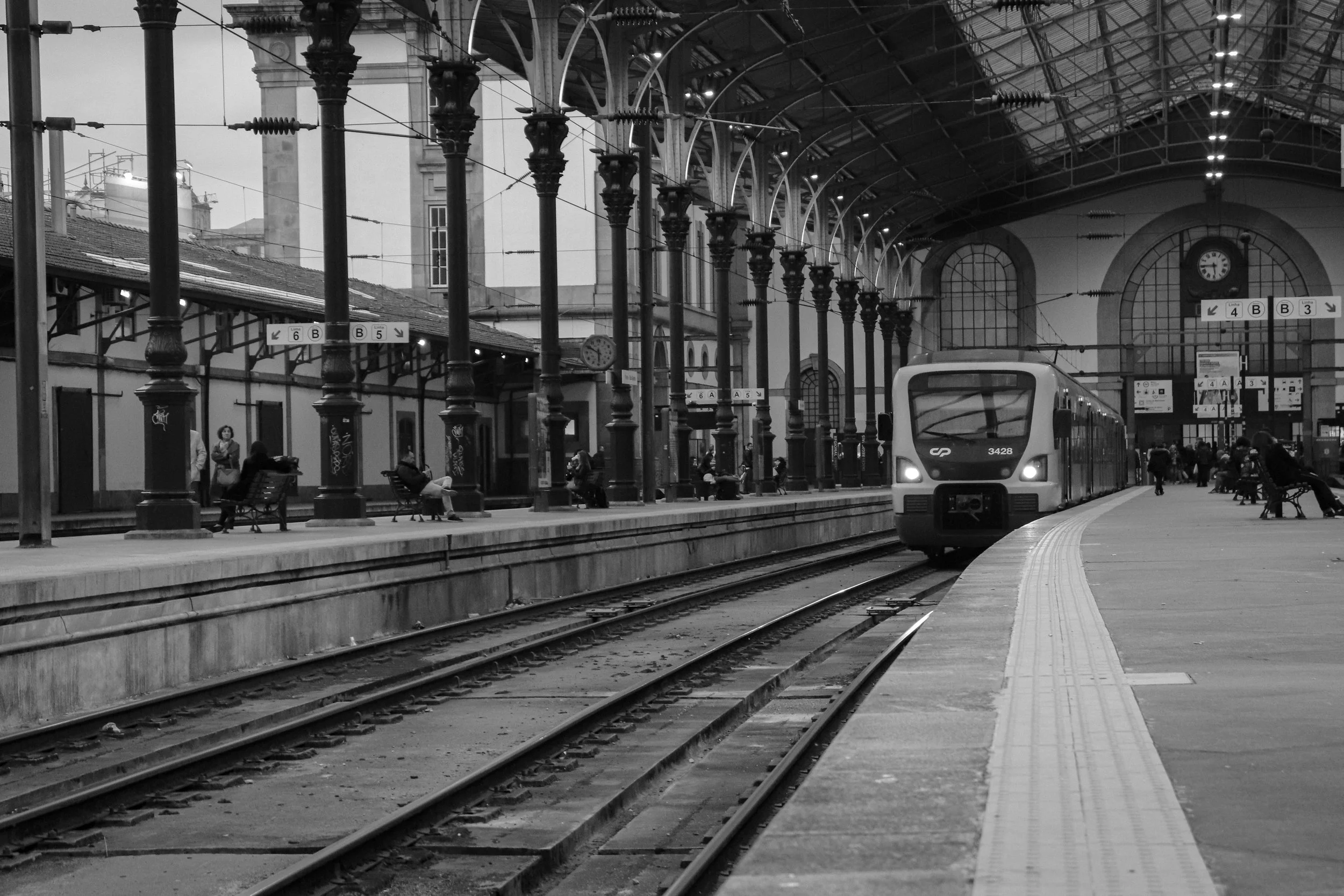
São Bento Train Station
Portugal by Train: The Complete Guide to Travelling Around Portugal
Discover how to travel around Portugal by train. Explore the railway network, understand the different train services, find the best routes, book your tickets and discover practical tips from a local perspective.
01 First things first
You have probably wondered what would be the best way to navigate through Portugal, either by renting a car or just getting on a bus. But, I’m here to teach that we have wonderful trains that are confortable, affordable and easy to use and that will make your experience Portugal in a much easier way.
The first thing to understand is that we have different trains for different routes and purposes. With the help of this diagram provided by CP - Comboios de Portugal (the only company operating trains here) I’ll explain in detail using colour codes, as displayed on the diagram:
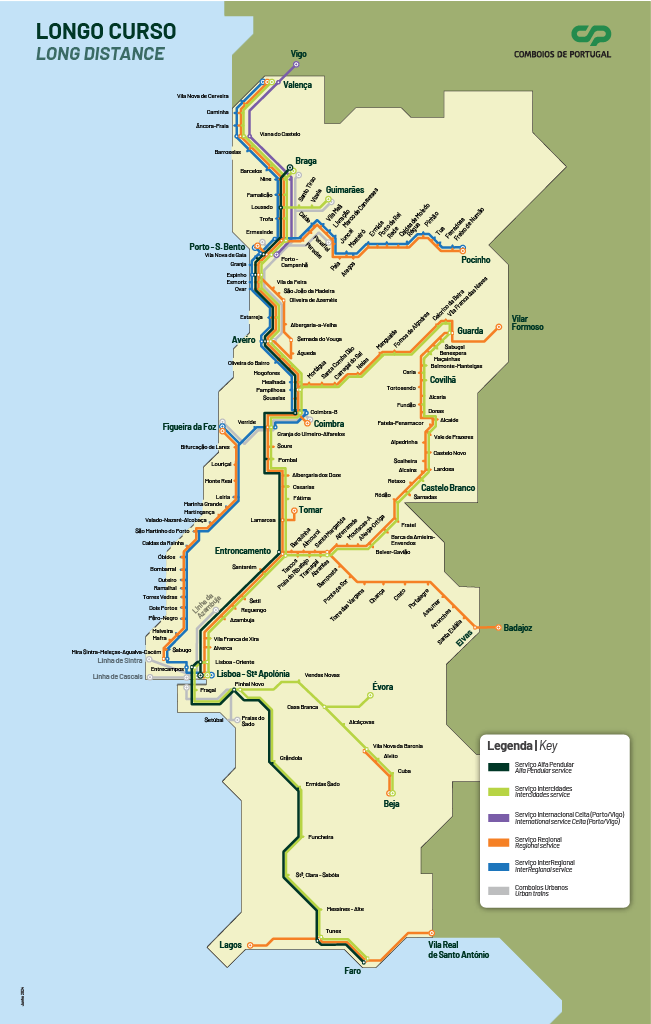
Provided by CP - Comboios de Portugal.
You can use it to identify connections between major cities, regional destinations and some of Portugal's most interesting landscapes.
A little tip: Don't assume that every railway line offers the same type of service. Some trains connect major cities with fewer stops, while others serve smaller towns and regional communities. Always check the actual timetable for your chosen journey.
You can find the latest railway map and official information on the CP website.
How does the Portuguese railway network work?
CP operates several types of services, ranging from high-speed intercity connections to regional and metropolitan trains.
The railway network connects many of the country's main destinations, including Porto, Coimbra, Lisboa and Faro, as well as smaller towns and regional areas.
However, not every destination is accessible by train. In some cases, you'll need to combine your journey with a bus, taxi or other means of transport.
02. Types of Trains in Portugal
Colours of text matching the lines on the previous map
Alfa Pendular
This is the best train we’ve got on our fleet and even though is not the bullet train like in Japan, it is in fact the fastest train in Portugal. It is our luxury train and It connects Braga to Algarve with the main stops in Porto, Aveiro, Coimbra, Lisboa, Entrocamento, Tunes and Faro.
It has the least amount of stops (the reason why it’s faster) and has the most amount of commodities aboard, like:
Free Wi-Fi;
Electrical outlets everywhere;
Audio and video channels;
Headphones available in the bar car;
Bar in carruage 3;
Baby changing room.
Intercidades (Intercities)
As the name indicates, this train is the one that connects every city in Portugal. It will give you a line connecting North to South covering most of Portugal.
On this one you can choose between first class and second class seats. On first class you may have electrical outlets, but not on every seat. So it is more of a pratical train that a fancy fast train. It also has a cafeteria bar, but not on the line in Alentejo.
Regional
This is the type of line which I like to associate with trails out of the beaten path. It connects you with the interior and the more inland areas of Portugal, like the Douro region for example. But, you may notice on the diagram that it can also take you from north to south, in which the difference will relay on a less confortable train.
Interregional (urbano)
Inter-regional trains type services allow fast-paced connections between the main centers of local and regional areas, serving as connecting trains between intercities and regional lines. It can also be used from north to center of the country, in a beatiful line along the coast of Portugal.
Urban
Line dedicated to travel inside the metropolitan areas, usually used by locals for their daily commute.
International
International connections with the rest of Europe, connecting to Vigo by Porto - Campanhã.
Fun fact, the longest train ride in the world starts in Portugal and ends in Singapore.
03. Planning Your Train Journey
Now that you understand the different types of trains, it's time to plan your journey.
How to search for train routes and timetables
The easiest way to plan a train journey in Portugal is through the official CP website.
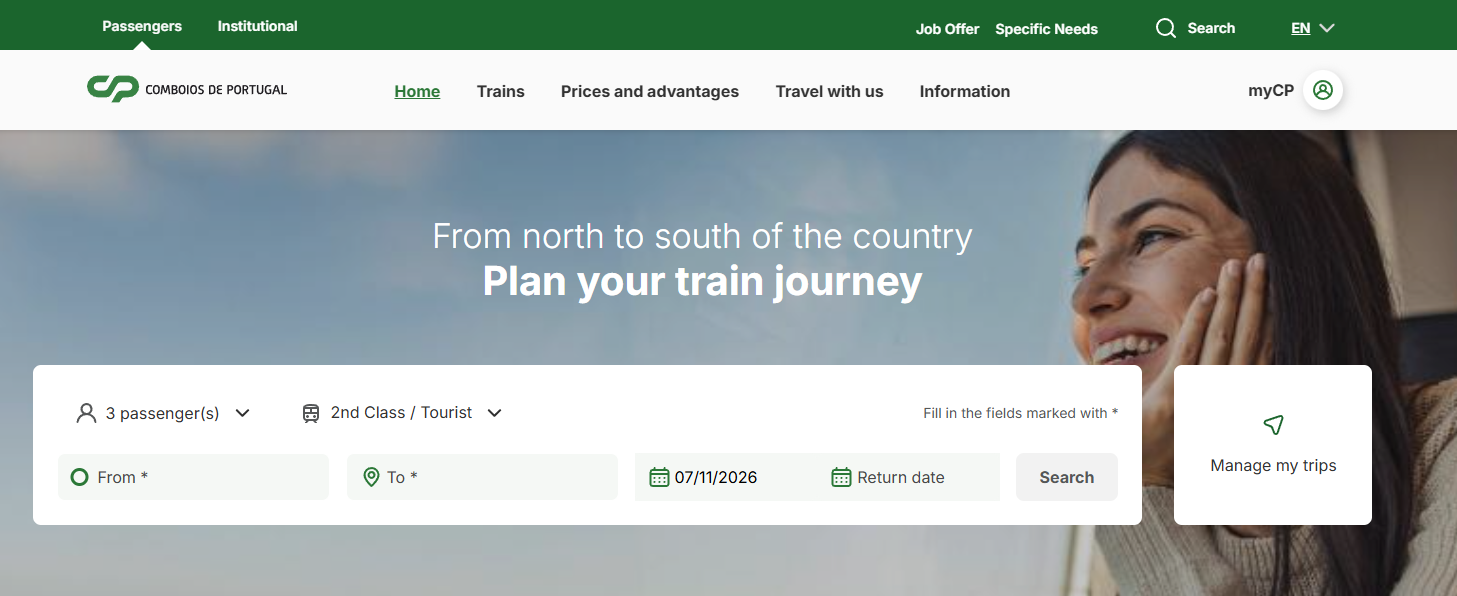
Visit www.cp.pt and enter:
Your departure station: “from”
Your destination: “to”
Your travel date.
The number of passengers.
Travel class: When booking your train ticket, you'll be asked to choose between two travel classes:
1st Class / Comfort: Offers more space and a higher level of comfort, ideal if you prefer a more relaxed journey.
2nd Class / Tourist: The standard and more affordable option, perfectly suitable for most journeys.
Keep in mind that this selection only determines your seating class. It does not change the type of train, route or journey you are booking. The available classes may vary depending on the train service.
You'll then be able to check the available services, departure times, journey duration and ticket prices.
My advice is to check the full journey rather than simply looking at the departure and arrival stations.
Some journeys require changing trains, and not every connection is necessarily convenient.
Pay particular attention to the station where you need to change trains and allow enough time between services.
You may also donwload and check the timetables for all of Portugal here: Train Timetables PDF | CP – Comboios de Portugal - CP.PT
04. How to buy train tickets in Portugal
Booking train tickets in Portugal is relatively straightforward.
You generally have three options:
1. Online through the CP website
This is usually the easiest way to book your journey.
The official CP online ticket office allows you to purchase tickets for several services, including Alfa Pendular, Intercidades, Regional and InterRegional trains.
You can also select your seat when this option is available.
2. Through the CP mobile app
If you prefer having everything on your smartphone, the CP app allows you to check timetables, purchase eligible tickets and access your journeys.
It's particularly useful when travelling around the country.
There is an Android and IOS version.
3. At the train station
You can also purchase tickets at staffed ticket offices and automatic vending machines, where available.
This can be useful if you need assistance or prefer buying your ticket in person.
I recommend using official CP sales channels whenever possible, rather than relying on unfamiliar third-party websites.
Ticket prices, discounts and reservations
Train ticket prices depend on the route, service, class and time of purchase.
CP offers several discounts and promotional fares, including options for young travellers, senior passengers, children and groups, subject to the applicable conditions.
Some long-distance services require a reserved seat, while other services operate differently.
For popular routes, particularly during summer, weekends and public holidays, I recommend booking in advance.
CP's online ticket office generally allows eligible tickets to be purchased up to 60 days before departure, although availability and conditions may vary.
Always check the latest fares, discounts and ticket conditions before travelling.
05. Travel Cards and Passes in Portugal
If you're planning to use trains regularly in Portugal, or simply want to make getting around a little easier, you might want to consider getting a travel card.
CP (Comboios de Portugal) offers several cards and passes, depending on where you're travelling and how often you plan to use public transport. Some are designed for the entire country, while others are specific to the metropolitan areas of Lisbon, Porto or Coimbra.
Here's a quick overview to help you understand which one might be right for your journey.
1. CP Card
The CP Card is a rechargeable travel card that allows you to load different types of train passes and tickets.
There are two versions available:
Physical card: €6.00
Digital card: €0.50
The physical card can be used for several domestic CP services, including:
You can also load the Golden Card, which offers a 50% discount to eligible passengers.
The digital version, on the other hand, is currently only available for the Green Rail Pass.
Find out more about the CP Card.
2. Navegante Pass – Lisbon
If you're staying in Lisbon or planning to explore the surrounding area, the Navegante Pass is probably the one you'll want to look into.
It costs €7.00 and allows you to load different Navegante passes, giving you access to Lisbon's urban trains and the wider public transport network across the Lisbon Metropolitan Area.
This is particularly useful if you plan to combine trains, metro, buses and other public transport during your stay.
Find out more about the Navegante Pass.
3. Andante Pass – Porto
For those visiting Porto, the Andante Pass is the equivalent option.
The card costs €6.00 and allows you to load different Andante passes, which can be used on Porto's urban trains and across the metropolitan area's public transport network.
If you're planning to explore Porto and its neighbouring towns without relying on a car, this is worth considering.
Find out more about the Andante Pass.
4. Move-C – Coimbra Region
If your travels take you to Coimbra and its surrounding region, you'll also find an integrated transport option called Move-C.
The card costs €6.00 and allows you to load monthly travel passes for municipal, intermunicipal and regional journeys, covering the relevant transport operators and services.
Which one should you choose?
It really depends on where you're going and how often you'll be using public transport.
If you're travelling across Portugal, the CP Card is worth looking into. If you're spending a few days exploring Lisbon or Porto, the Navegante and Andante options are more relevant, respectively.
One thing I'd recommend is checking the available passes before buying a card. Depending on your itinerary, you might not need one at all, especially if you're only planning a couple of train journeys.
06. Choosing your seat

One of the advantages of travelling on certain Portuguese trains, particularly the Alfa Pendular and Intercidades, is the possibility of choosing your seat during the booking process.
But which seat should you choose?
It really depends on who you're travelling with.
Travelling with family or friends?
Some carriages have tables with four seats facing each other. These are particularly convenient when travelling in a group, allowing everyone to sit together.
Travelling as a couple?
You might prefer two seats next to each other, away from the tables, if you would like a little more privacy.
Travelling alone?
A window seat is always a good option, especially if you're travelling through some of Portugal's more scenic regions.
Here’s a print screen of the booking seat system of a Alfa Pendular (fast train):

Image from CP - Portugal train booking system.
In red are the occuppied seats;
In retangular grey are the tables;
To choose which direction you will be seated, you have a darker colour either before the number, like number 42 in which you are seated in the direction you are traveling, or after the number like number 41 in which you are seated backwords. A good detail is knowing that > Sentido da Marcha > means “Direction of Travel (gait)”,
07. Getting to the Train Stations
If you're arriving in Portugal by plane, you might be wondering how to get from the airport to the railway network.
Fortunately, both Lisbon and Porto have metro connections that make it relatively easy to reach the main railway stations.
Lisboa Airport to the railway stations
Lisboa Airport is connected to the city's metro network through the Red Line.
One of the most useful stations for connecting with long-distance trains is Oriente, which is an important transport hub serving national railway services.
You can take the metro from the airport towards Oriente and connect with your train there.
Depending on your destination, you may also need to travel to other railway stations, such as Santa Apolónia or Entrecampos.
Before leaving the airport, check which station your train departs from. Lisboa has several railway stations, and they are not interchangeable!
Porto Airport to the railway stations
Porto Airport is also connected to the metro network.
The Violet Line (Line E) connects the airport with the city and provides access to Campanhã, one of the most important railway stations in northern Portugal.
Porto Campanhã is the main station for many long-distance services, including Alfa Pendular and Intercidades trains.
Porto São Bento is another important station, particularly for urban journeys and visitors exploring the historic city centre.
If your train departs from Campanhã, don't assume that São Bento is the same station. Always check your ticket carefully.
A little tip: If you're travelling with large suitcases or have a tight connection, allow yourself some extra time. Navigating an unfamiliar transport network can take longer than expected.
08. The Best Places to Visit by Train
One of the best things about travelling by train is that the journey itself can become part of the experience.
Portugal has several destinations that are particularly interesting to explore by railway.
Here are a few places I'd recommend considering when planning your trip.
Porto and the Douro Valley
[ADD IMAGE: Douro Valley railway and river]
If there's one railway journey I would recommend experiencing in Portugal, it's the journey along the Douro Valley.
Starting in Porto, you can travel towards Régua, Pinhão and eventually Pocinho, depending on the service and timetable.
The route follows the Douro River through vineyards, hillsides and traditional villages.
It's a wonderful way to discover one of Portugal's most famous wine-producing regions.
Pinhão is particularly worth visiting, not only for its location in the heart of the Douro Valley but also for its beautiful railway station, decorated with traditional Portuguese azulejo panels.
If you're interested in exploring this region further, take a look at my [Douro Valley guide].
Aveiro
[ADD IMAGE: Aveiro canals or railway station]
Located between Porto and Coimbra, Aveiro is a popular destination for a day trip.
Known for its canals, traditional boats and colourful buildings, it's an easy place to explore on foot once you arrive.
The railway station is relatively close to the city centre, making it a convenient destination for visitors travelling from Porto or Coimbra.
Coimbra
[ADD IMAGE: Coimbra University or historic city]
Coimbra is one of Portugal's most historic university cities.
Its old town, university buildings and riverside setting make it an interesting destination for a day trip or a longer stay.
The main railway station for long-distance services is Coimbra-B, so remember that you may need to connect to Coimbra's central station depending on your train.
Lisbon and Sintra
[ADD IMAGE: Sintra Palace or Sintra railway station]
Sintra is one of the most popular day trips from Lisbon.
The town is famous for its romantic architecture, historic palaces, gardens and beautiful landscapes.
You can reach Sintra using Lisbon's urban train network, departing from Rossio station.
It's a convenient journey, although I recommend starting early, particularly during the high season, as Sintra can become very busy.
Other scenic train journeys
Portugal has more railway routes worth exploring than the ones mentioned above.
Depending on your interests, you could also consider travelling towards the Minho region, exploring the Algarve by train or discovering some of the smaller towns along regional railway lines.
The best route for you will depend on how much time you have and what you would like to experience.
09. Travelling by Train: Practical Tips
Before getting on board, there are a few practical things worth knowing.
Luggage and personal belongings
If you're travelling with suitcases or backpacks, make sure you can comfortably carry everything yourself.
Most long-distance trains provide designated luggage areas and overhead storage, but space can be limited, particularly during busy periods.
Keep your valuables and important documents with you and never leave your belongings unattended.
Boarding your train
Arrive at the station with enough time to find your platform and locate your carriage.
Larger stations can be busy, and the platform information may only be displayed shortly before departure.
Check your ticket carefully, including:
Departure station.
Destination.
Departure time.
Train number.
Carriage and seat number, when applicable.
Changing trains
Some journeys require changing trains along the way.
When booking, check whether your connection is included in the same itinerary and whether the transfer time is sufficient.
Don't assume that a train will wait if your previous service is delayed.
If something goes wrong, speak to CP staff or consult the official customer support channels as soon as possible.
Travelling with bicycles or children
If you're travelling with a bicycle, check the rules for your specific train service before booking. Bicycle transport is subject to conditions and availability.
The same applies to travelling with children, pushchairs or passengers requiring additional assistance.
CP provides information about accessibility and passenger assistance on its website.
Keep an eye on service updates
Railway timetables can change, and occasional disruptions may affect your journey.
Before travelling, check the latest notices on the CP website or app.
It's always better to know about a change before arriving at the station!
07. When the Train Is Not the Best Option
Although travelling by train is a great way to explore Portugal, it isn't always the most convenient option.
The railway network connects many of the country's main cities and regional centres, but some destinations are difficult to reach without additional transport.
For example, if you're planning to explore remote villages, secluded beaches or rural areas, you might find yourself needing a bus, taxi or rental car for the final part of your journey.
This is particularly relevant if you're interested in exploring Portugal beyond its most popular tourist destinations.
So, should you rent a car or take the train?
It really depends on your itinerary.
I'd generally recommend travelling by train if:
You're visiting major cities such as Porto, Coimbra or Lisbon.
You want to enjoy the scenery without worrying about driving.
You're planning a journey along the Douro Valley.
You prefer not to deal with parking or city traffic.
On the other hand, renting a car may be more convenient if:
You want to explore remote villages and rural areas.
You're travelling with a flexible itinerary.
You're visiting several destinations that aren't well connected by public transport.
You want to explore smaller roads and discover places away from the main tourist routes.
There isn't one perfect way to explore Portugal. Sometimes, combining trains with other means of transport is actually the best solution.
08. Frequently Asked Questions
Is travelling by train in Portugal expensive?
Not necessarily. Portugal offers different types of train services and ticket prices depend on the route, class and time of booking.
Regional and urban journeys can be relatively affordable, while longer journeys on Alfa Pendular and Intercidades services may cost more.
There are also discounts and promotional fares available through CP.
Do I need to book train tickets in advance?
For long-distance services, I recommend booking in advance, particularly during weekends and the summer season.
Some trains have limited seat availability, and popular departures can sell out.
For shorter urban journeys, advance booking is generally less important.
Is Portugal's railway network reliable?
Portugal has an established railway network connecting many major cities and regional destinations.
However, like any railway system, delays, strikes, engineering works and service disruptions can occur.
Always check the latest service information before travelling, especially if you have an important connection.
Can I travel around Portugal without renting a car?
Absolutely!
You can visit many of Portugal's main cities and several interesting destinations using trains and other public transport services.
However, if you want to explore more remote areas, you may need to combine different means of transport.
Can I change or cancel my train ticket?
CP allows changes and refunds for eligible tickets, subject to the fare conditions and applicable deadlines.
If you purchased your ticket online, you can generally manage eligible changes and refund requests through the My Trips area on the CP website.
Always check the conditions associated with your ticket before purchasing.
Where can I find the official train map for Portugal?
You can find the official railway network map on the CP website.
It's a useful starting point when planning your journey and understanding which railway services operate in different parts of the country.
Final Thoughts
Now that you have a better understanding of the Portuguese railway system, you're ready to start planning your journey!
Whether you're travelling from Porto to Pinhão to discover the Douro Valley, taking a day trip from Lisbon to Sintra or exploring some of the smaller towns along the railway network, there are plenty of places waiting to be discovered.
Of course, trains won't take you everywhere, but they can certainly make travelling around Portugal easier, more comfortable and, sometimes, a little more adventurous.
I hope this guide has helped you understand how to navigate Portugal by train and made planning your trip a little easier.
And if you need a hand designing your itinerary, discovering Portugal or finding the right experiences along the way, feel free to get in touch with me.
I'd be happy to help you discover Portugal!
Enjoy your journey!
Feel free to contact me if you need help designing your trip or if you are in the market for an amazing guided tour in Portugal.