
Porto Itinerary: A Local Guide to 2 Days in the City
Porto is a city best discovered on foot. Its narrow streets, centuries-old buildings, colourful facades and riverside neighbourhoods tell stories that go far beyond what you see in a postcard.
As someone born in Porto and working as a tour guide in Portugal, I've had the pleasure of discovering the city from different perspectives. And one thing I've learnt is that Porto is much more than its famous landmarks. It's in the little details, the unexpected viewpoints, the local traditions and the stories hidden behind its historic walls.
My friends are always asking me what to do in Porto and everytime I design something for them to see and do. So, I decided to do a best off for everyone to experience by themselves when you visit my beautiful city.
If you're planning a visit and wondering how to make the most of your time, this two-day Porto itinerary will help you discover the city's highlights, explore some lesser-known corners and experience a little of its authentic character.
I've put together a walking route combining history, architecture, food and beautiful scenery, with a few personal recommendations along the way.
So, put on some comfortable shoes, take your time and let's explore Porto!
On this page
Day 1 – Discovering Historic Porto
Day 2 – Across the Douro River
Practical Tips for Visiting Porto
Final Thoughts
Day 1 – Discovering Historic Porto
I always like to start my first day in a new city by getting a feel for the place. Rather than rushing from one attraction to another, I prefer to explore its streets, observe everyday life and discover the little details that make it unique.
Porto is perfect for this. Its historic centre is full of character, with traditional shops, beautiful architecture, centuries of history and, of course, plenty of good food.
For your first day, I've put together a walking itinerary that takes you through some of the city's most iconic landmarks, as well as a few lesser-known corners worth discovering. The route combines sightseeing, local food and a little time to simply enjoy the atmosphere.
Here are the places I'd recommend visiting, in this order:

Starting at Rua de Santa Catarina
One of the most excentric streets in Porto for a shopping spree and for beautiful coffee shops like “Majestic Café” and churches like “Capela das Almas”, you will find there’s a lot to do at this pedestrian only shopping street.
FOTO DO CAFÉ E DA CAPELA
Mercado do Bolhão
Just a short walk from Rua de Santa Catarina, you'll find Mercado do Bolhão, one of Porto's most emblematic traditional markets.
Its history dates back to 1839, when the market first opened to serve the city's growing population. The beautiful building we see today was constructed in 1914 and, after an extensive restoration, reopened its doors in September 2022.
For generations, Bolhão has been an important part of everyday life in Porto, supplying locals with fresh fish, meat, fruit, vegetables and other regional products. Although tourism has brought a new audience to the market, its traditional traders and fresh produce remain at the heart of the experience.
Take your time to wander between the stalls, admire the architecture and soak up the atmosphere. It's one of the best places to experience a little of the city's gastronomic culture.
Tip: You can buy a glass of wine at a local vendor and walk around the market while tasting Portugal’s famous cheeses and meats.Pérola do Bolhão
Just around the corner from the market, you'll find Pérola do Bolhão, a charming traditional shop dating back to 1917.
Originally specialising in tea, coffee and spices, the shop has evolved over the years and now offers a variety of Portuguese delicacies and local products.
But what makes this little shop particularly special is its architecture. Its beautifully decorated Art Nouveau façade, with its distinctive details and traditional shopfront, makes it worth stopping for a closer look.
It's a small reminder that sometimes the most interesting discoveries in Porto are found between the better-known attractions.
Regaleira
By now, you might be getting hungry. If it's around lunchtime, I recommend stopping at A Regaleira, a restaurant closely associated with the birth of Porto's most iconic dish: the Francesinha.
Created in 1952 by Daniel David da Silva, the Francesinha was inspired by the French Croque Monsieur, but adapted with a distinctly Portuguese character. Made with layers of meat, sausage, melted cheese and a rich, slightly spicy sauce, it has become one of the city's most beloved dishes.
It's certainly not a light lunch, but it's an experience worth having while in Porto!
And if you're wondering where the name comes from, Francesinha literally means 'little French woman'.
S.Bento train station with 20.000 tiles
After a beautiful lunch, make your way towards São Bento Railway Station, just a short walk away.
At first glance, it might look like an ordinary railway station from the outside, but step inside and you'll understand why it's considered one of Portugal's most beautiful.
The station was built on the site of the former Convent of São Bento de Ave-Maria and officially opened in 1916. Its main hall is covered with approximately 20,000 traditional Portuguese azulejos, painted by artist Jorge Colaço.
Look closely at the blue-and-white panels and you'll discover scenes from Portugal's history, including the conquest of Ceuta, alongside representations of rural life, traditional customs and important historical events.
It's almost like stepping into a history book, only this one is painted on the walls.
Torre dos Clérigos
As you continue towards the historic centre, you'll soon spot the unmistakable silhouette of Clérigos Tower rising above the city's rooftops.
Standing approximately 75 metres tall, the tower is one of Porto's most recognisable landmarks and offers a spectacular 360-degree view over the city and the Douro River.
If you're up for a challenge, you can climb its narrow staircase to the top. There are more than 200 steps, and the passage can feel quite tight, especially when visitors are going up and down at the same time.
A little personal confession: I'm not particularly comfortable with heights myself, but somehow, once I'm up there, I feel surprisingly safe!
The view is absolutely worth the climb.
Leitaria Quinta do Paço
Since 1920, Leitaria da Quinta do Paço has been delighting Porto with its famous éclairs. Originally a dairy shop, it’s one of the few that survived from those early 20th-century days when fresh milk was delivered daily to the city. Over time, it became known for its handmade pastries, especially the iconic whipped cream éclairs, crispy outside, soft inside, and filled with pure nostalgia.Igreja do Carmo
Right next to the Carmelite Church, you’ll find the stunning Igreja do Carmo, or rather, two churches side by side, separated by the narrowest house in Porto! Built in the 18th century, this Baroque church is one of the city’s most photographed landmarks, thanks to its magnificent blue-and-white tiled façade. The tiles, added in 1912, depict scenes from the founding of the Carmelite Order and shine beautifully under the Porto sun.Jardim da Cordoaria
Just a few steps away, the Jardim da Cordoaria offers a peaceful break in the middle of the city. Shaded by ancient plane trees and surrounded by playful sculptures by João Cutileiro, it’s a favorite spot for locals, students, and artists alike. Once a place where ropes were made for ships (hence the name “Cordoaria”), today it’s where people come to slow down and enjoy the rhythm of Porto life.Livraria Lello
Often described as one of the most beautiful bookstores in the world, Livraria Lello is pure magic. Opened in 1906, its neo-Gothic façade invites you into a world of carved wood, stained glass, and a red staircase that seems to float midair. Rumor has it that J.K. Rowling was inspired by this place while writing Harry Potter, whether true or not, you’ll definitely feel the enchantment as soon as you walk inside.Praça de Lisboa
Hidden between the Clérigos Tower and the Lello Bookstore, Praça de Lisboa is a modern twist in Porto’s historic heart. Built over an underground shopping gallery, this green rooftop square blends old and new architecture perfectly. Locals love to relax here with a coffee, while students chat under the olive trees, it’s a small urban oasis right next to some of the city’s busiest attractions.Judiaria do Porto
The old Jewish quarter of Porto, or Judiaria, dates back to medieval times. Walking through its narrow alleys near São Bento da Vitória, you can still feel the traces of the community that once flourished here. It was a vibrant place of commerce, culture, and faith until the 15th century, when the Jewish population was expelled. Today, it remains one of the most authentic and lesser-known parts of the city’s history, quiet, mysterious, and deeply human.Miradouro da Vitória
One of Porto’s best-kept secrets, the Miradouro da Vitória offers a stunning view over the city’s rooftops, the Cathedral, and the Douro River. It’s not as polished as other viewpoints, but that’s part of its charm — raw, real, and local. It’s the perfect spot to take a breath, snap a few photos, and appreciate the timeless beauty of Porto’s old town.Ribeira
Down by the riverbank, Ribeira is where Porto’s soul truly lives. Colorful houses, laundry hanging from the balconies, street musicians playing fado — everything here feels alive. Once the heart of the city’s trade and shipbuilding, today it’s a UNESCO World Heritage area filled with cafés, restaurants, and endless energy. Whether you’re crossing the bridge to Gaia or simply watching the boats drift by, Ribeira is pure Porto, vibrant, romantic, and unforgettable.
Day 2 - Relaxing Day
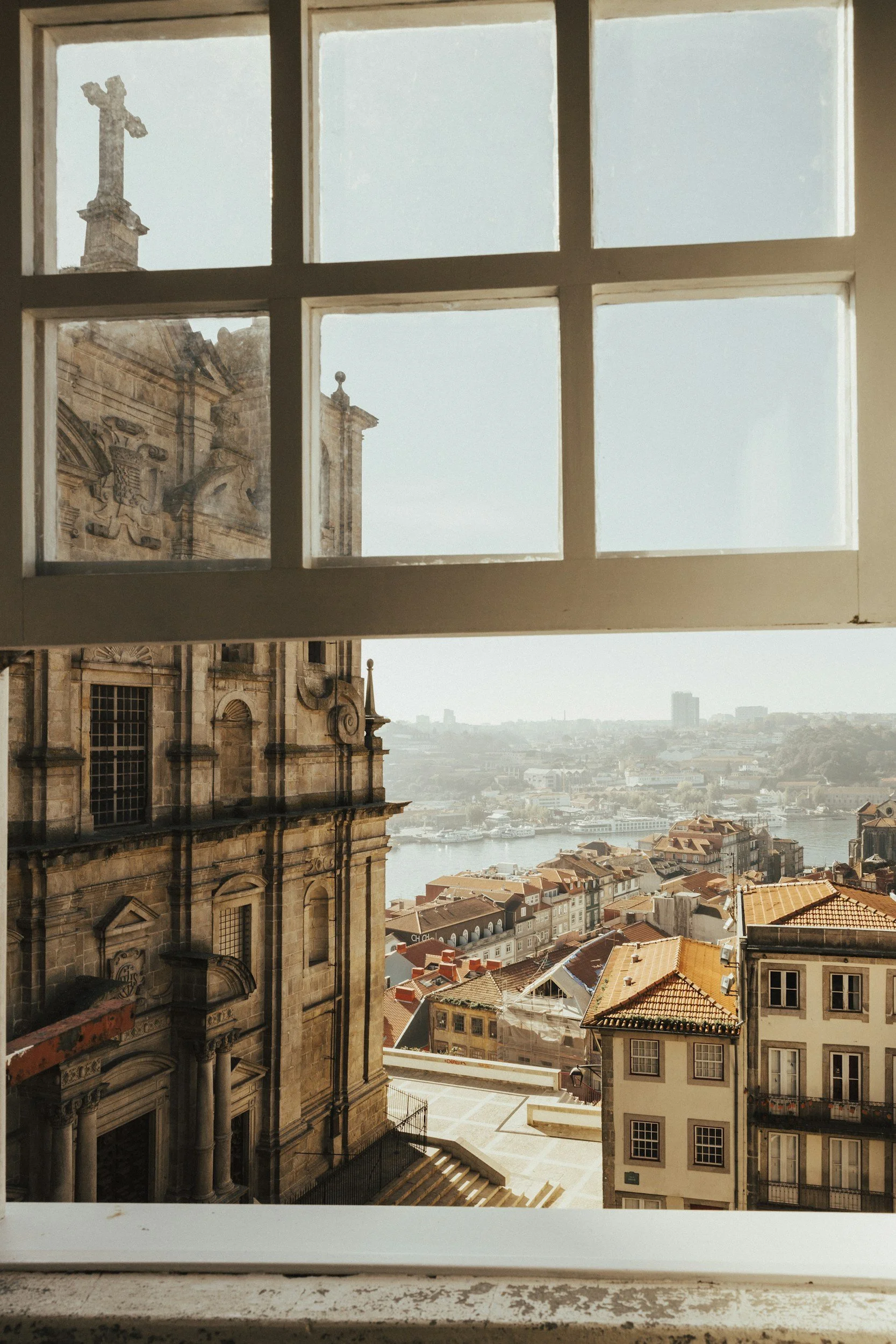
Sé do Porto
Standing on one of the city’s highest hills, Porto’s Cathedral, or Sé do Porto, has watched over the city for almost a thousand years. Built in the 12th century, it combines Romanesque, Gothic, and Baroque styles, showing how Porto evolved through the centuries. From the square in front, you get one of the best views over the rooftops and the Douro River, a perfect place to start a slow morning in Porto.Antigo Bairro
Just behind the Cathedral, you’ll find the maze-like streets of the old medieval neighborhood. This is where the city was born — narrow alleys, stone houses, and clotheslines hanging between windows. It feels like time stopped here. Walking down these streets, you can imagine the life of old Porto: merchants, sailors, and locals greeting each other at every corner. It’s one of those places where every step tells a story.Ribeira
By now, you’re back down by the river, in one of the most charming areas of Porto. Ribeira is the beating heart of the city, colorful façades, balconies full of flowers, and the sound of the Douro boats in the background. It’s the perfect spot to slow down, have a glass of wine, and simply watch the city breathe. At night, the lights reflecting on the river make it even more magical.Ponte D. Luís
Just a few meters away stands one of Porto’s most iconic symbols, the Dom Luís I Bridge. Opened in 1886 and designed by a disciple of Gustave Eiffel, this double-deck iron bridge connects Porto and Vila Nova de Gaia. Crossing it on foot gives you a breathtaking view of the river, the hills, and the old city. Whether you cross it by day or at sunset, it’s one of those memories that stays with you forever.Vinho do Porto Wine Cellars
On the other side of the river, in Gaia, you’ll find the world-famous Port Wine Cellars. For centuries, this is where the city’s sweet, fortified wine has aged in huge oak barrels. Visiting one of these cellars is more than a tasting, it’s a journey through the history of Porto’s most iconic export. You’ll learn how the wine is made, stored, and shipped, and, of course, enjoy a glass (or two) at the end.Mosteiro da Serra do Pilar
At the very top of the Gaia hill stands the Monastery of Serra do Pilar, a UNESCO World Heritage site. Its circular church is unique in Portugal, and from its terrace you get what might be the best panoramic view of Porto, the bridge, the cathedral, the entire historic center. It’s an ideal spot to end the day: calm, quiet, and with a golden sunset over the river that makes the whole city glow.